
The U.S. Treasury Secretary just dropped a bombshell: "We’re in a Bretton Woods realignment." Translation? The rules of money are being rewritten. If you don’t adapt, your savings could vanish while others get rich.
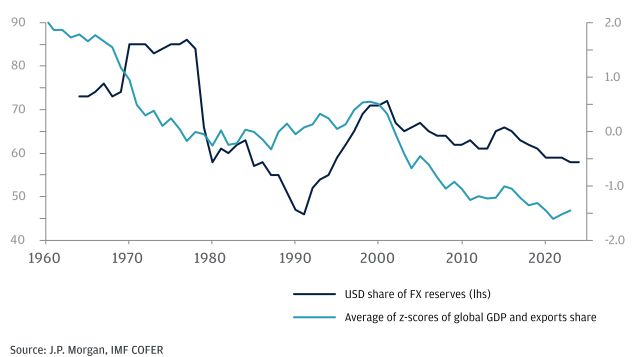
This isn’t speculation—it’s policy. The dollar’s share of global reserves has crashed from 71% to 58% in years. Central banks are hoarding gold. The national debt is on track to hit $40 trillion by 2026. The reset is happening, and history shows resets don’t favor the unprepared.
Felix from Goat Academy breaks it down: "This is the difference between generational wealth and financial ruin." The last Bretton Woods reset created the post-WWII boom—but left many behind. The same is happening now.
What’s Actually Happening?
Bretton Woods (1944) made the dollar the world’s reserve currency, backed by gold. Nixon ended the gold standard in 1971. Now, the dollar is backed by nothing but trust—and that trust is eroding.
The U.S. spends $7 trillion/year but collects only $5 trillion in taxes. The gap? Borrowing and money printing. More dollars chasing goods = inflation. And inflation isn’t a bug—it’s a feature. It transfers wealth from savers to asset owners.
Inflation is the quietest way to default. You don’t miss payments—you just make money worth less.
The Treasury’s reset plan likely includes:
1. A weaker dollar. The U.S. wants a 20-40% devaluation to boost exports. The 1985 Plaza Accord did this—successfully—dropping the dollar 50% against the yen.
2. Bank deregulation. Post-2008 rules are being unwound to spur lending and crypto integration. Risk? More 2008-style blowups (but bankers get bailed out).
3. Tariff-driven reshoring. The U.S. is using tariffs to bring manufacturing home. Goal: 3% GDP growth, 3% deficit, 3M more barrels/day of energy.

How to Lose Money in the Reset
1. Holding cash. Savings accounts pay 4-5%, but inflation is 3.4%. That’s a negative real return. A 20-40% dollar drop makes cash worth even less.
2. 100% U.S. stocks. The S&P 500 gets 40% of revenue overseas. A weaker dollar hurts earnings when converted back to USD.
3. Waiting for the ‘perfect’ moment. The reset is happening now. The biggest risk isn’t bad timing—it’s inaction while others adapt.